
Join the growing number of DSU alumni who’ve chosen to make legacy gifts. When you champion Dakota State University, you are moving our mission and vision forward.
Providing Student and athletic Scholarships
When Miles Beacom arrived at Dakota State at 17 — one of five kids from a family with little to spare — a track and cross country scholarship made his first year possible and changed the course of his life. Decades later, he’s paying it forward, sponsoring Champion Scholarships for students like Paige Phinney. Freed from the weight of tuition, Paige pours herself into her studies and into CybHER, teaching cybersecurity to K–8 students across South Dakota.
In this conversation, the two talk scholarships, community, and the cycle of giving back that keeps Trojans thriving — a cycle sustained by supporters like you.
Trojan athletics
Two weeks into her outdoor season, Casey Olson tore the UCL in her throwing arm, the one ligament she needed to throw javelin, and assumed her year was finished. But at the season’s final meet, she let go of the pressure, rediscovered the joy of her favorite event, and hit the qualifying standard on her last throws. She carried that same relaxed focus into the 2026 NAIA Outdoor Track & Field National Championships, launching the javelin 46.66 meters to claim the national title and break the DSU school record. Hear Casey reflect on her comeback, the pressure, and what it means to represent Dakota State on the national stage — moments your support helps make possible.
Explore upcoming games and events, and help power the next Trojan champion.
Advancing Teacher Education
DSU Earns A+ Rating for Elementary Reading Instruction Preparation
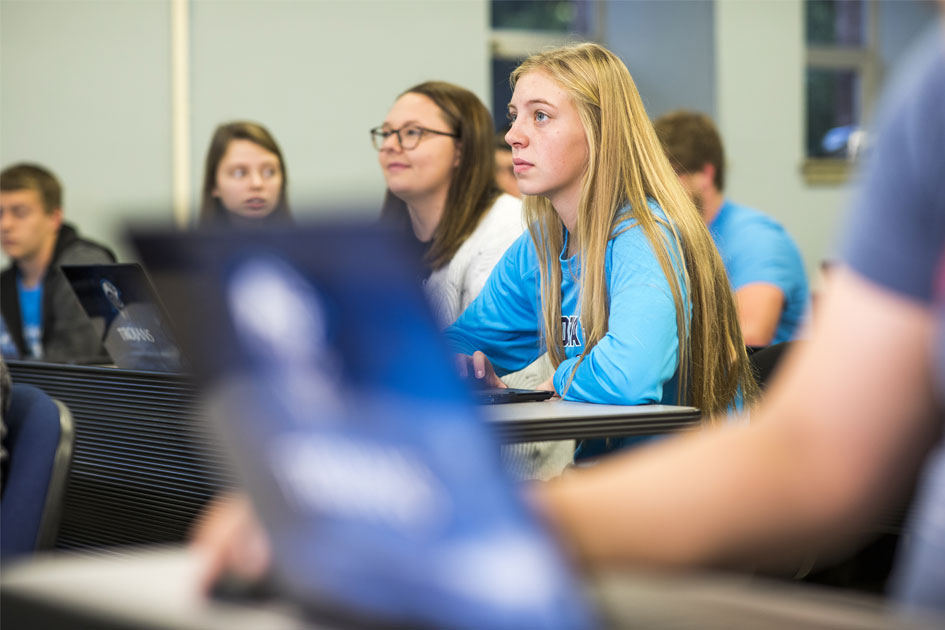
Every child deserves a teacher who knows how to help them read. That conviction just earned Dakota State national recognition: the University’s Bachelor of Science in Elementary Education program received an A+ rating from the National Council on Teacher Quality — one of only two programs in South Dakota to reach that mark, out of more than 700 evaluated nationwide. The rating reflects deep preparation in the science of reading, equipping DSU graduates to teach the fundamentals that set students up for a lifetime of learning. When a Trojan-trained teacher walks into a classroom, a whole community of young readers benefits, and your support helps put them there.
Read More about DSU's A+ Rating
Dakota State University’s Bachelor of Science in Elementary Education program has earned an A+ rating from the National Council on Teacher Quality (NCTQ) for excellence in preparing future teachers to teach reading using evidence-based instructional practices.
DSU was one of only two teacher preparation programs in South Dakota to receive an A+ rating in NCTQ’s 2026 Teacher Prep Review: Decoding Progress in Reading Preparation, which evaluated more than 700 elementary teacher preparation programs nationwide. The review recognizes programs that provide comprehensive preparation in the science of reading and avoid instructional methods that research has shown to be ineffective.
To earn an A+ rating, programs must demonstrate strong preparation in all five components of scientifically based reading instruction: phonemic awareness, phonics, fluency, vocabulary, and comprehension. Programs receiving the highest rating also avoid teaching instructional practices that are not supported by reading research.
“Every child has the right to become a skilled reader,” said Dr. Katie Anderson, associate professor in DSU’s College of Education & Human Performance. “Preparing teachers with a deep understanding of evidence-based literacy instruction is essential to making that possible. At Dakota State University, we are committed to equipping educators with the knowledge and practical skills to help all students succeed as readers, while continually strengthening our program through ongoing research and continuous improvement. We are honored that NCTQ’s A+ rating recognizes that commitment.”
The recognition reflects the College of Education & Human Performance’s commitment to preparing future educators with the knowledge and skills needed to help students become successful readers. Research has consistently shown that effective reading instruction in the early grades is a critical factor in long-term academic success.
NCTQ’s review included an analysis of required literacy coursework, syllabi, instructional materials, assessments, and opportunities for teacher candidates to practice reading instruction. Programs were evaluated on how effectively they prepare aspiring teachers to deliver scientifically based reading instruction and support student literacy development.
“Every child deserves a teacher who has been well prepared to teach reading, and every teacher deserves the opportunity to enter the classroom ready to help students succeed,” said NCTQ President Heather Peske. “Across the country, many teacher preparation programs still do not fully align with the science of reading, but Dakota State University is demonstrating what strong preparation can look like.”
The recognition comes as South Dakota and states across the nation continue to emphasize literacy instruction grounded in the science of reading. Strong teacher preparation plays an important role in ensuring elementary students receive effective reading instruction from the beginning of their educational journey.
More Than 450 Educators Join 11th Annual DSU Teach Camp
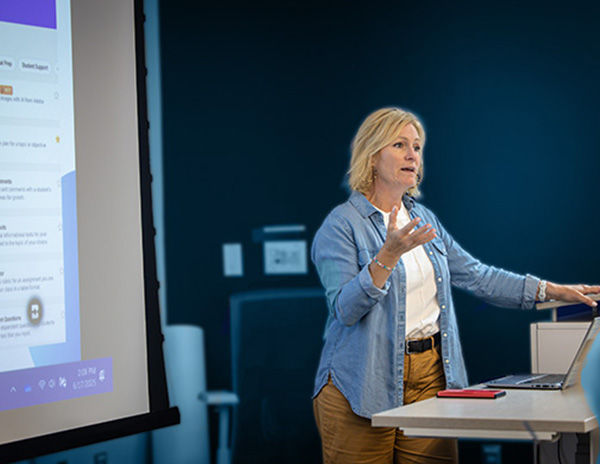
On a single day in June, more than 450 educators from across South Dakota and the region logged on to improve their skills. They came for Dakota State’s 11th annual Teach Camp — 15 sessions on everything from artificial intelligence and literacy to motivation and leadership, opened by an Emmy Award-winning keynote on the power of helping others feel seen. What began in 2016 has grown into one of the region’s largest virtual professional development events, and its reach doesn’t stop with the teachers in attendance: every strategy they carry home lands in a classroom full of students. Your support helps DSU keep equipping the educators who shape tomorrow.
Read More about the DSU Teach Camp
Dakota State University’s Bachelor of Science in Elementary Education program has earned an A+ rating from the National Council on Teacher Quality (NCTQ) for excellence in preparing future teachers to teach reading using evidence-based instructional practices.
DSU was one of only two teacher preparation programs in South Dakota to receive an A+ rating in NCTQ’s 2026 Teacher Prep Review: Decoding Progress in Reading Preparation, which evaluated more than 700 elementary teacher preparation programs nationwide. The review recognizes programs that provide comprehensive preparation in the science of reading and avoid instructional methods that research has shown to be ineffective.
To earn an A+ rating, programs must demonstrate strong preparation in all five components of scientifically based reading instruction: phonemic awareness, phonics, fluency, vocabulary, and comprehension. Programs receiving the highest rating also avoid teaching instructional practices that are not supported by reading research.
“Every child has the right to become a skilled reader,” said Dr. Katie Anderson, associate professor in DSU’s College of Education & Human Performance. “Preparing teachers with a deep understanding of evidence-based literacy instruction is essential to making that possible. At Dakota State University, we are committed to equipping educators with the knowledge and practical skills to help all students succeed as readers, while continually strengthening our program through ongoing research and continuous improvement. We are honored that NCTQ’s A+ rating recognizes that commitment.”
The recognition reflects the College of Education & Human Performance’s commitment to preparing future educators with the knowledge and skills needed to help students become successful readers. Research has consistently shown that effective reading instruction in the early grades is a critical factor in long-term academic success.
NCTQ’s review included an analysis of required literacy coursework, syllabi, instructional materials, assessments, and opportunities for teacher candidates to practice reading instruction. Programs were evaluated on how effectively they prepare aspiring teachers to deliver scientifically based reading instruction and support student literacy development.
“Every child deserves a teacher who has been well prepared to teach reading, and every teacher deserves the opportunity to enter the classroom ready to help students succeed,” said NCTQ President Heather Peske. “Across the country, many teacher preparation programs still do not fully align with the science of reading, but Dakota State University is demonstrating what strong preparation can look like.”
The recognition comes as South Dakota and states across the nation continue to emphasize literacy instruction grounded in the science of reading. Strong teacher preparation plays an important role in ensuring elementary students receive effective reading instruction from the beginning of their educational journey.
Developing Problem Solvers and Innovators
Research led by Dakota State University faculty member Dr. Varghese Vaidyan has been selected for inclusion in a new book, published by Springer, focused on the emerging field of quantum artificial intelligence security.
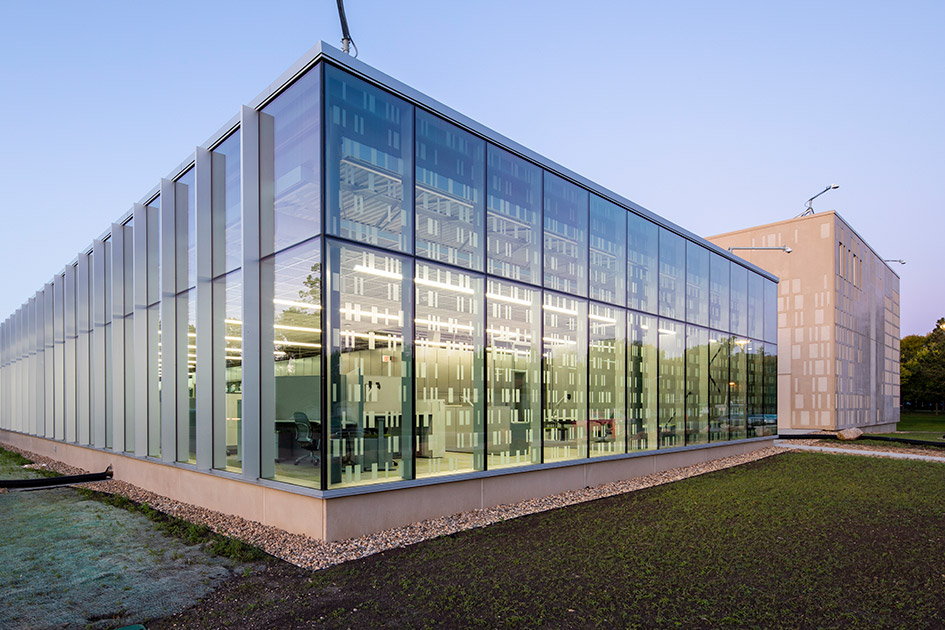
The team’s work on developing more secure and resilient AI models is the type of frontier research we’ve come to expect from the world-class faculty and talented students at Dakota State University, and it’s putting DSU students shoulder to shoulder with global experts before they graduate. Your support helps keep DSU and its students at the leading edge of research and innovation that is changing the world.
Read More About the Team's work in AI
Vaidyan and his collaborators authored chapter four of the book, “Quantum Adversarial Machine Learning and Defense Strategies: Challenges and Opportunities,” in the newly published volume titled Quantum Robustness in Artificial Intelligence. The chapter examines how artificial intelligence systems can be protected against adversarial attacks in future quantum computing environments and proposes design principles for building more secure and trustworthy quantum-enabled AI systems.
“Quantum computers are poised to take adversarial attacks to a level that classical defenses simply cannot anticipate. They will run more sophisticated optimization algorithms to find and exploit vulnerabilities in ways we have not seen before,” said Vaidyan. “Our team’s work establishes three concrete design principles — post-quantum cryptography, quantum-resistant neural network architectures, and transparent and accountable deployment — that give researchers and practitioners an actionable framework for building machine learning systems that can withstand that threat.”
The invitation to contribute came from Dr. Mohammad Usman, editor of the volume and a leading international researcher in quantum technologies. Dr. Usman serves as Head of Quantum Systems at Australia’s Commonwealth Scientific and Industrial Research Organisation (CSIRO) Data61 and is a professor at the University of Melbourne in Australia.
The invitation followed publication of the team’s previous work in quantum artificial intelligence and security, highlighting growing recognition of research being conducted at Dakota State University and the Beacom College of Computer and Cyber Sciences.
“This invitation reflects the quality and relevance of the work being conducted by our researchers and students in quantum computing, artificial intelligence, and cybersecurity,” said Dr. Ashley Podhradsky, Vice President for Research and Economic Development at DSU. “Recognition from internationally respected leaders in quantum research demonstrates the impact DSU is making in areas that will help shape the future of technology and national security.”
The chapter was authored by Eric Yocam, a 2026 graduate of DSU’s Cyber Operations program, Anthony Rizi, Mahesh Kamepalli, Varghese Vaidyan, Yong Wang, a former DSU faculty member, and Gurcan Comert. Their work explores emerging threats to quantum machine learning systems and outlines strategies for developing resilient AI models capable of withstanding adversarial attacks.
The book brings together contributions from researchers around the world examining the security, robustness, and reliability of quantum machine learning systems. According to Springer, the volume provides a comprehensive overview of the rapidly developing field of quantum adversarial artificial intelligence and its applications in security-sensitive environments.
The recognition comes amid a productive period of scholarly activity for Vaidyan’s research team. Over the past year, the group has published research spanning quantum-resistant cybersecurity, transportation security, explainable artificial intelligence, digital forensics, advanced driver assistance systems, and quantum-classical computing applications. The team also collaborated with researchers from Savannah River National Laboratory, a U.S. Department of Energy national laboratory, applying quantum AI expertise to the evaluation of scientific data and resulting in a peer-reviewed publication.
Cyber27
DSU’s Beacom College of
Computer and Cyber Sciences
At the Beacom College of Computer & Cyber Sciences, students don’t just study cybersecurity; they’re immersed in it. From day one, they’re hands-on: solving real problems, building real tools, even working on projects with the real customers. Class sizes stay small enough that faculty know every student by name and give them room to experiment, fail, and learn faster. Staying on the leading edge is the whole point — so graduates walk into the workforce ready, competing at the same level as any other school in America, but with a one-on-one attention only a place like DSU can offer. Your support helps put that experience within reach for more students.

DSU wins National Collegiate Cyber Defense Competition title
Ten teams reached the finals of the National Collegiate Cyber Defense Competition — the country’s premier cyber defense contest — and Dakota State came home national champions. Over two days, DSU students defended a simulated corporate network under live attack, hunting threats and making decisions under pressure exactly as they would in the field. Their captain called it a blessing to bring the trophy home to South Dakota, and it’s no fluke: this is what hands-on, real-world cyber education is built to produce. Students from Sioux City to Kyiv to Kathmandu, competing at the very top and winning. Your support helps DSU keep them there.
Read More About the Cyber Defense National Title
Dakota State University students earned first place at the National Collegiate Cyber Defense Competition (NCCDC), securing the national title after two days of head-to-head cyber defense challenges against top teams from across the country.
DSU finished ahead of the University of Virginia and Western Washington University on the podium, demonstrating sustained performance across technical defense, service continuity, and business response scenarios. In total, 10 teams participated in nationals, representing the winners of regional competitions held across the country.
DSU’s national championship team, coached by Jackson Heiberger, instructor in The Beacom College of Computer & Cyber Sciences, included:
- Team Captain Malachi Reynolds (cyber operations; Sioux City, Iowa)
- Diksha Janaki (cyber operations and network security administration; Doha, Qatar)
- William Tilstra (cyber operations; Rogers, Minn.)
- Ihor Makhynia (computer science and cyber operations; Kyiv, Ukraine)
- Sarad Gaihre (computer science; Kathmandu, Nepal)
- Brayden Borges (cyber operations; Sacramento, Calif.)
- Kalen McNab (master’s in cyber operations; Brewster, Minn.)
- Lia Schmidt (cyber operations; Estelline, S.D.)
Team alternates included:
- Jon Reel (cyber operations; Sioux Falls, S.D.)
- Ethan Clark (cyber operations and computer science; Groton, S.D.)
- Lane Klarenbeek (cyber operations and computer science; Hudson, S.D.)
- Jacob Radford (cyber operations; Mill Creek, Wash.)
“Winning NCCDC is a crowning achievement for this university’s cybersecurity competition resume,” said Reynolds. “DSU has put together so many extremely talented teams every year, and to be a part of bringing the trophy home to South Dakota is a blessing unlike any other.”
The NCCDC is the nation’s premier collegiate cyber defense competition, focused on the operational challenges of securing and maintaining existing network infrastructure under active attack. Teams are evaluated on their ability to detect and respond to threats, maintain critical services, complete real-time business tasks, and balance security decisions with organizational needs.
“The competition does reflect what you might see in the real world of dealing with threat actors that are trying to stay under the radar,” said McNab, echoing the thoughts on real-world application shared by other team members. “It puts more of an emphasis on needing to watch for anomalies and strange traffic in your network that you have not seen before which allows you to start threat hunting and finding the threat actors.”
Over the course of the competition, DSU students defended a simulated corporate network while responding to evolving cyber threats and completing business “injects” that required communication, prioritization, and decision-making under pressure.
The group prepared for nationals by attending several cybersecurity competitions in the region and the Collegiate Incident Response Competition for Undergraduate Students (CIRCUS) National Finals in Pasadena, California, which they won.
“By the time we had completed all those competitions, we felt like we had really solid team communication, and rode that momentum into nationals,” Reynolds said.
“The variety of competitions we did to prepare gave us a diverse taste of the skills necessary,” said Schmidt.
The NCCDC model emphasizes real-world readiness by requiring teams to maintain operations while under attack, rather than focusing solely on system design or configuration. Participants must keep services such as email and web servers running, respond to stakeholder requests, and defend against professional-level adversaries.
“This was an incredible opportunity for our students to get practical experience responding to active attacks,” said Heiberger. “It’s not often that defenders are able to go head-to-head with attackers in such a realistic environment. DSU’s continued success at NCCDC, culminating in the national title this year, speaks to the efficacy of our coursework to prepare students for real-world engagements.”
This national title reflects DSU’s continued leadership in cybersecurity education and its focus on applied, hands-on learning experiences that prepare students to meet complex challenges in the field.
Student Stories
Become a Dakota State University Insider
Do you want to receive exclusive email updates directly from Dakota State University?
Get direct and instant access to a member of our team, who will share information about your impact, project outcomes and stories from the field.